If you’ve been comparing electricity plans recently, you may have noticed a new term starting to appear – ‘dynamic tariffs’.
For many, smart tariffs may already feel confusing enough. Day rates, night rates, peak pricing, time of use plans … it can be difficult to work out which tariff suits you best. Now dynamic tariffs are entering the Irish market too. But what exactly are they, how do they work, and could they actually save you money?
Here’s what you need to know.
What is a dynamic tariff?
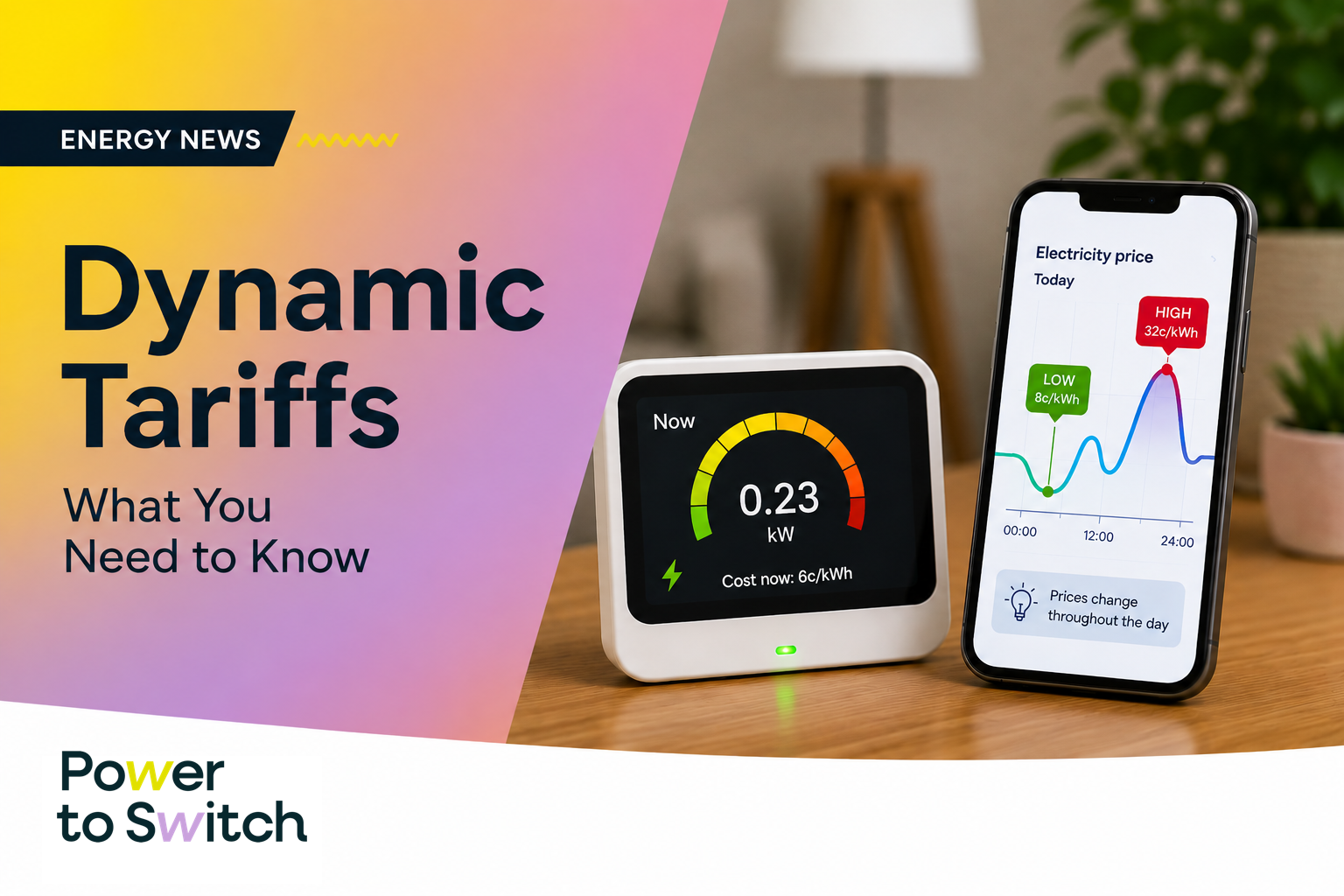
A dynamic tariff is a type of energy plan where part of the price changes in line with wholesale electricity prices.
Unlike standard electricity plans, where prices stay broadly constant, dynamic tariffs include a variable pricing element that can rise or fall depending on electricity market costs.
In terms of what makes up the price, dynamic tariffs generally include:
- a standing charge
- a base electricity charge
- a dynamic electricity element linked to wholesale prices
This means only part of the electricity cost changes, rather than all elements that make up the final price constantly moving up and down.
When wholesale electricity prices are lower, for example during periods of strong wind generation or lower demand, the dynamic electricity rate may be cheaper. When wholesale prices rise, the dynamic element of the tariff can increase too.
Why are dynamic tariffs being introduced?
Dynamic tariffs are part of a wider move toward a smarter and more flexible electricity system in Ireland.
Ireland is generating more renewable electricity than ever before, particularly from wind power. But renewable electricity supply can change throughout the day depending on weather conditions and demand.
At times there may be lots of lower-cost renewable electricity available. At other times, electricity can be more expensive to generate and supply. Dynamic tariffs are designed to encourage electricity use when cleaner and potentially cheaper electricity is more available.
The thinking behind this is simple: If households can shift electricity use to lower-cost periods, they may reduce costs while also helping balance demand on the grid.
Under Irish and EU energy rules, larger suppliers are now required to make dynamic pricing options available to customers with smart meters. This means we’re likely to see more dynamic tariff offers emerge over the coming months and years.
Dynamic tariffs are part of the smart meter journey
It’s important to note that dynamic tariffs are effectively an extension of the smart tariff options already emerging in Ireland.
Just like smart tariffs, you will need a smart meter (with decent connectivity) to access a dynamic tariff. This is because smart meter data allows suppliers to measure when electricity is being used and apply changing prices accurately.
Who could benefit from a dynamic tariff?
Dynamic tariffs are unlikely to suit every household. They may work best for people who can shift electricity use to cheaper periods.
This could include households with:
- An EV that can be charged flexibly
- Solar panels or battery storage
- Heat pumps with programmable controls
- Flexible routines that allow appliances to run during lower-cost periods
People who are comfortable actively managing their electricity use may be able to benefit the most. For example, running washing machines, dishwashers or EV charging during lower-cost periods could help reduce bills.
But if most of your electricity use happens at fixed times, particularly during more expensive periods, savings may be harder to achieve.
What should consumers be aware of?
Dynamic tariffs may offer opportunities but there are some things to think about.
- Prices can rise as well as fall
While there may be opportunities to benefit from cheaper electricity, the dynamic part of the tariff can increase too. That means there is generally more uncertainty compared with standard tariffs or fixed smart plans.
- They may require more effort
Dynamic tariffs are unlikely to be a “set and forget” option. To get the best value, some households may need to:
- Monitor prices and shift electricity use to cheaper periods
- Time appliances to be used or to come on more carefully
- Be more flexible about when energy is used
For some households, this will suit but for others, the savings may not justify the hassle.
- Smart tariffs are already confusing for many households
The truth is that many consumers are still trying to work out whether and how smart tariffs can work for them. Adding dynamic tariffs into the mix could make comparing electricity plans feel even more complicated.This doesn’t mean dynamic tariffs are a bad idea but it does mean households need clear, independent information before deciding what is right for them.
- Switching may not be as straightforward (yet)
Because dynamic tariffs are still very new to the Irish market, switching may not be as simple, at least in the early stages.
Based on what ‘Power to Switch’ has seen since these tariffs have been made available (start of June), suppliers appear to be asking customers to contact them directly if interested in a dynamic tariff, rather than making the process fully available online. This may change as suppliers expand their offers and systems develop, but for now it does add an extra layer of complexity for consumers trying to compare options.
Will dynamic tariffs cheaper?
The honest answer is it’s still very early days.
Dynamic tariffs are new to the Irish market and there is limited data showing how they compare against traditional or smart tariffs over a full year.
Some households could make savings – particularly those who can be flexible about when they use electricity. Others may find a traditional tariff, smart plan or smart 24Hr plan works out better.
Can Power to Switch compare dynamic tariffs?
Yes. At Power to Switch, we compare dynamic electricity tariffs, helping you understand what works best for your home. Currently, there is a limited range of tariffs available.
On our results page for smart tariffs, you can view (i) smart tariffs only (ii) smart and dynamic tariffs or (iii) dynamic tariffs only.
Using your actual electricity usage, including smart meter data where available, we can help you see:
- Whether a dynamic tariff could suit your household
- How it compares with standard and smart plans
- Whether any potential savings are likely to be worth it
As more plans enter the market and the picture becomes clearer, Power to Switch will continue helping consumers cut through the confusion and find the tariff that genuinely suits their needs.
Want to see if a dynamic tariff could work for you? Compare electricity plans with Power to Switch and see what suits your home best.